
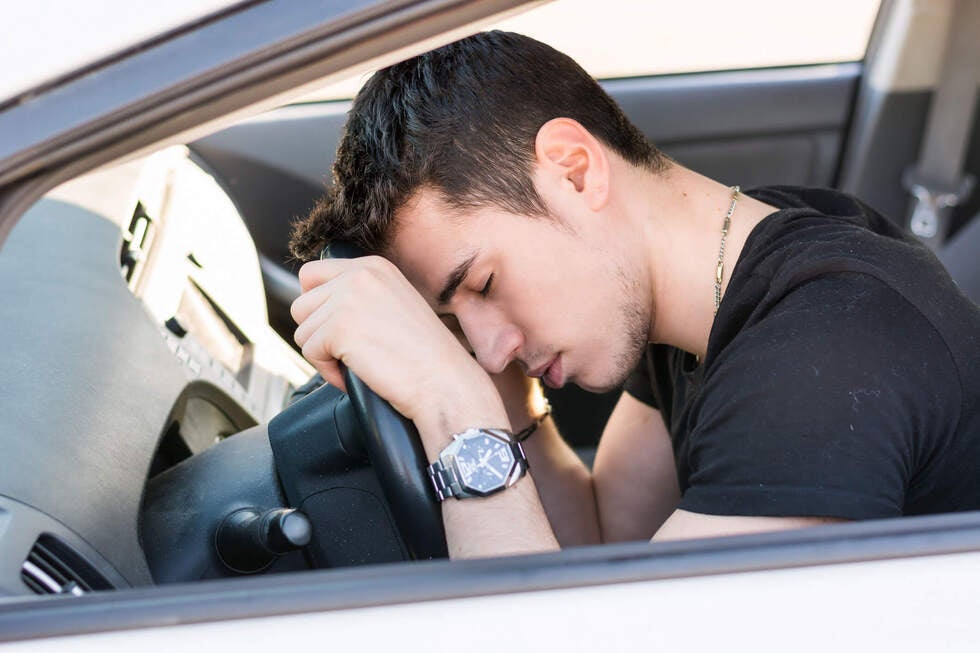
This question usually comes from one of two very different situations. Either someone is genuinely curious whether it's legal to nap in a parking lot, or someone made what felt like the responsible call after a night out, decided not to drive, and is now worried they made a mistake anyway. Both deserve a straight answer, and the honest one is that this question is actually two separate legal questions wearing the same sentence.
The Short Answer
There's no general Nevada law that makes it illegal to simply sleep in your car. Where you're parked can create its own separate issue, private property, posted restrictions, and certain public areas all carry their own rules. But the far more common and far more serious risk has nothing to do with sleeping itself: if you're impaired by alcohol or drugs while sleeping in your car, Nevada's DUI law can still apply to you, even though you were never actually driving.
Why This Question Confuses Two Different Legal Issues
"Is it illegal to sleep in my car" sounds like a single question, but it's really asking about two unrelated legal categories at once: where you're allowed to park and rest, and whether being impaired while sitting in a parked vehicle can still get you charged with a crime. Conflating the two is where most of the confusion, and most of the real risk, comes from.
Issue One: Where You're Parked Matters More Than the Fact You're Sleeping
Sleeping in a legally parked car on public property generally isn't, by itself, against the law in Nevada. That said, location-specific rules can still apply. Private property, including many casino and retail parking structures throughout Las Vegas, can post restrictions on overnight parking or extended stays, and remaining after being asked to leave can raise trespassing concerns separate from anything related to sleeping itself. Some residential areas and specific municipal zones have their own posted parking limits as well. None of this is about sleeping being illegal; it's about the underlying property or parking rules that would apply whether you were awake or asleep. If you're unsure about a specific location, checking posted signage or the property's own policy is the simplest way to avoid an issue that has nothing to do with impairment at all.
Issue Two, and the One That Actually Matters: "Actual Physical Control"
This is where the real legal exposure lives, and it surprises people constantly because it runs against common sense. Nevada's DUI statute doesn't only criminalize driving while impaired; it criminalizes being in "actual physical control" of a vehicle while impaired, and courts have interpreted that phrase to include someone sitting in a parked car under the right circumstances, even fully asleep.
What pushes a sleeping, parked person into "actual physical control" territory typically comes down to a few factors: whether the keys are in the ignition, whether the person is in the driver's seat, and whether the circumstances suggest they drove to that location while already impaired. A person asleep in the back seat, with the keys somewhere other than the ignition, parked somewhere it's evident they couldn't have driven to while impaired, is in a meaningfully different legal position than someone found slumped over the wheel with the engine running or the keys within reach in the ignition.
This plays out constantly in a city built around shift work and nightlife. A rideshare driver finishing a long night on the Strip, a valet or casino employee coming off a late shift, or a visitor who had a few drinks and decided to sleep it off in a rental car before driving to the airport can all find themselves in exactly this situation. The choice to not drive impaired is the right one. It just doesn't automatically protect someone from arrest the way most people assume it does.
A Practical Framework If You Genuinely Need to Sleep It Off
If you find yourself needing to wait out impairment in your car rather than drive, a few choices meaningfully reduce, though don't eliminate, the risk of a "sleeping DUI" arrest:
- Keep the keys out of the ignition, and ideally out of easy reach entirely, such as in a trunk or glovebox.
- Move to the back seat rather than staying behind the wheel, if you're able to do so safely.
- Park somewhere it's evident you couldn't have arrived while impaired, rather than in a spot that suggests you just drove there.
- Leave the engine off, since a running engine is one of the clearer signals police look for.
- Let someone know where you are if possible, both for safety and to establish a timeline if it's ever relevant later.
None of this guarantees you won't be approached by police or asked questions. But it puts you in a meaningfully stronger position than being found in the driver's seat with the keys in the ignition, which is close to the clearest version of "actual physical control" under Nevada law.
What to Do If You're Approached or Arrested
If an officer wakes you up in this situation, stay calm, be polite, and avoid volunteering more information than necessary. You're not required to explain how much you had to drink or where you were coming from. Nevada's implied consent law does require submitting to a chemical test once you're lawfully arrested on suspicion of DUI, and refusing that test carries its own separate consequences, which we've covered in more detail in our guide on DUI test refusal in Nevada. Being arrested is not the same as being convicted, and the specific facts, where you were parked, where the keys were, whether the engine was running, all matter significantly to how a case like this can be defended.
The Bottom Line
Sleeping in your car isn't illegal in Nevada. Being impaired while doing it, in the wrong seat, with the keys in the wrong place, can still lead to a DUI arrest, even though you never touched the gas pedal. Understanding that distinction before you need it is worth far more than learning it after the fact.
If you've been arrested for a DUI while sleeping in a parked car, or you're unsure how Nevada's actual physical control standard applies to your situation, Gallo Criminal Defense Las Vegas has more than 18 years of experience defending DUI cases throughout Clark County. Our office is located near the courthouse in downtown Las Vegas, and we're available around the clock. Our full breakdown of Nevada DUI laws covers the broader legal framework if you want more detail. Contact our Las Vegas DUI defense attorney today for a free consultation.
Frequently Asked Questions
Can I get a DUI in Nevada if I wasn't actually driving?
Yes. Nevada's DUI law applies to being in "actual physical control" of a vehicle while impaired, which can include sitting in a parked car, not just active driving. Whether a specific situation meets that standard depends on factors like where the keys were and whether it's evident the person drove there while impaired.
Does it matter if the engine is off?
It's one factor among several, not an automatic protection on its own. Keys in the ignition, sitting in the driver's seat, and evidence of having driven to that location while impaired can all still support an "actual physical control" finding even with the engine off.
Is it safer to sleep in the back seat instead of the driver's seat?
Generally, yes, from a legal risk standpoint. Being in the driver's seat, particularly with the keys in the ignition, is one of the clearest indicators police and prosecutors look for. It doesn't eliminate risk entirely, but it's a meaningfully different position than being behind the wheel.
Can I be arrested just for sleeping in my car if I haven't been drinking?
Sleeping in your car while sober generally isn't a criminal issue on its own, though where you're parked can still raise separate concerns, such as trespassing on private property or violating posted parking restrictions.

Comments
There are no comments for this post. Be the first and Add your Comment below.
Leave a Comment