

People searching for this usually expect a single website, a name, a birthdate, and an answer. That expectation makes sense; most government lookup tools work that way. Nevada's warrant system does not, and that gap between expectation and reality is exactly where people get into trouble, either by giving up the search too early or by walking into the wrong place to check.
The First Thing to Understand: There Is No One Place to Look
Nevada does not maintain a single, statewide public warrant database. Warrants are issued by individual courts, and each court in Clark County operates its own system. The Clark County District Attorney's own warrant status guidance reflects this directly: it does not point to one search tool. Instead, it lists out the separate municipal and justice courts you may need to contact, depending on where the underlying case originated, each with its own phone number and procedure.
In practical terms, a warrant in your name could be sitting in any of the following systems, and checking one does not rule out the others:
- Las Vegas Municipal Court, which handles misdemeanor cases and traffic citations within city limits
- North Las Vegas Municipal Court, for cases originating in that city
- Henderson Municipal Court, for cases within Henderson
- Las Vegas Justice Court, which handles felony and gross misdemeanor arraignments along with misdemeanors outside city limits
- Clark County District Court, for felony cases that have proceeded past the initial stages
If you lived, worked, or were cited in more than one of these jurisdictions over the years, even briefly, more than one of these systems is worth checking. This is the detail that nearly every generic article on this topic skips, and it's the reason someone can check "the warrant website" and walk away falsely reassured.
How to Actually Check in Each Jurisdiction
Each municipal and justice court that serves Clark County provides its own way to check warrant status, generally through an online case lookup tool, a phone call to the court clerk's office, or an in-person visit. The specific portal, hours, and information required vary by court. Because the procedures differ enough to matter, and because we field this question regularly from people trying to sort out exactly which court their case sits in, we've put together jurisdiction-specific guides for the courts we see most often:
- Checking warrants through Las Vegas Municipal Court
- Checking warrants through Henderson Municipal Court
If you are not sure which court your case would be in, that uncertainty is itself common, particularly for older citations, out-of-state moves, or cases where you were never entirely clear on what you were cited for in the first place. That is a reasonable thing to ask an attorney to help sort out rather than guessing and checking five different systems on your own.
The Part Almost Nobody Tells You: Checking Can Carry Risk
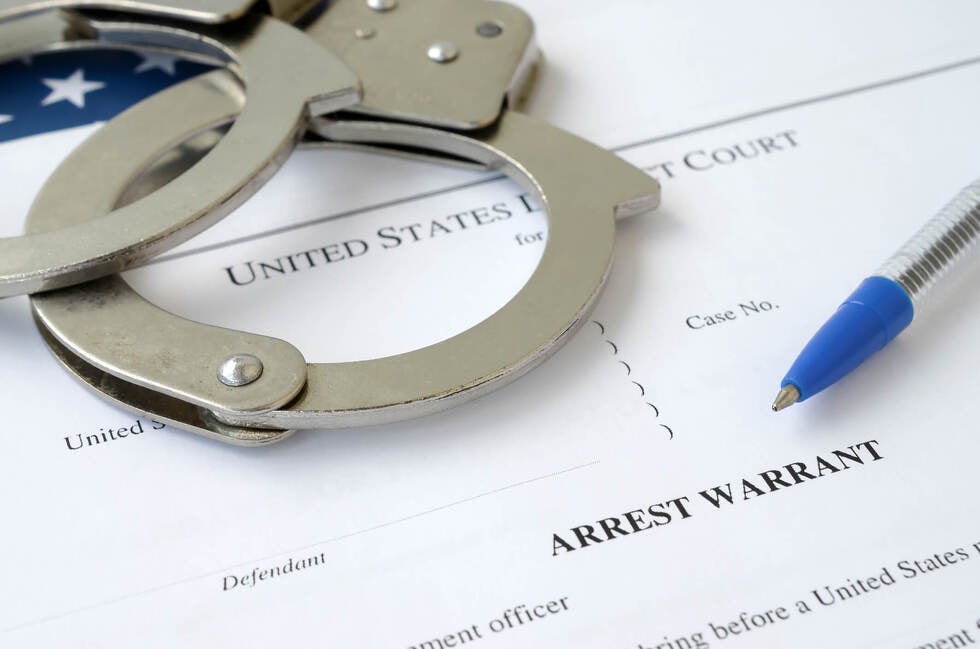
Most articles on this topic walk through the lookup process and stop there, as if checking is a purely administrative, risk-free errand. It isn't always. Some of the available methods for confirming a warrant, particularly going in person to a court counter or calling certain clerk's offices, can result in being taken into custody on the spot if an active warrant is confirmed while you are standing there. The official guidance from Clark County itself notes that going to a court counter requires valid identification, which is precisely the information a warrant system needs to confirm a match and act on it.
This is not a reason to avoid finding out. It is a reason to think about how you find out. An attorney can check warrant status on your behalf through channels that do not place you in a courthouse lobby the moment a match comes back, and can advise you on next steps, including whether posting bail to satisfy the warrant or filing a motion to address it makes more sense given your specific situation, before you ever have to appear anywhere unprepared.
What Happens If You Do Have a Warrant
If a warrant is confirmed, you generally have a few realistic paths forward, and which one fits depends heavily on the type of warrant and the underlying case:
Bench warrants, issued when someone misses a scheduled court date or fails to comply with a court order, can sometimes be resolved through a motion to quash, particularly when there's a legitimate explanation for the missed appearance. Arrest warrants tied to a new criminal allegation are a different matter and typically require appearing before the court, often with bail involved, to address the underlying charge directly. If you are facing a warrant tied to a case that originated out of state, Nevada's extradition process under the Uniform Criminal Extradition Act may also come into play.
Resolving a warrant on your own, without legal guidance, often means showing up to the situation with no plan beyond hoping things go smoothly. Resolving it with an attorney handling the logistics first generally means walking in with a strategy already in place: an understanding of why the warrant was issued, what the realistic options are, and what to expect at each step.
If you believe you may have an outstanding warrant in Las Vegas or anywhere in Clark County, the Las Vegas warrant attorney at Gallo Criminal Defense Las Vegas can check your status, explain what you are dealing with, and help you resolve it under the best available terms. Call (702) 385-3131 any time, including evenings and weekends, for a free and confidential consultation.
Frequently Asked Questions: Warrants in Nevada
Is there one website to check for any warrants in Nevada?
No. Nevada does not maintain a single statewide public warrant search tool. Warrants are tracked separately by the court that issued them, which means a search through one city's municipal court website will not reveal a warrant issued by a different city's court, the county justice court, or the district court. Thoroughly checking in Clark County may involve reviewing multiple systems.
Can I check if I have a warrant without going to the police?
In many cases, yes. Most municipal and justice courts in Clark County offer online case lookup tools or allow you to call the clerk's office directly, without requiring an in-person visit to a police station. Some methods, including in-person visits to certain court counters, can carry a higher risk of on-the-spot custody if a warrant is confirmed. An attorney can check on your behalf through channels designed to avoid that outcome.
What is the difference between a bench warrant and an arrest warrant in Nevada?
A bench warrant is typically issued by a judge when someone fails to appear for a scheduled court date, fails to pay a fine, or otherwise fails to comply with a court order in an existing case. An arrest warrant is generally issued in connection with a new criminal allegation, based on a judge's determination that probable cause exists. The path to resolving each differs, which is why correctly identifying which type you're dealing with matters.
Will I be arrested immediately if I have a warrant?
Not necessarily, but it depends heavily on the circumstances, the type of warrant, and how you go about addressing it. Some warrants can be resolved by posting bail or filing a motion without an arrest occurring at all. Others, particularly active arrest warrants for new charges, are more likely to result in custody if law enforcement makes contact. This is precisely the kind of situation where understanding your specific warrant before taking action matters most.
How long does a warrant stay active in Nevada?
Warrants generally remain active until they are resolved, whether through arrest, voluntary appearance, posting bail, or a successful motion addressing the warrant. There is no general expiration date that causes a warrant to simply disappear on its own, so an old, forgotten citation from years ago can still be outstanding today.

Comments
There are no comments for this post. Be the first and Add your Comment below.
Leave a Comment