
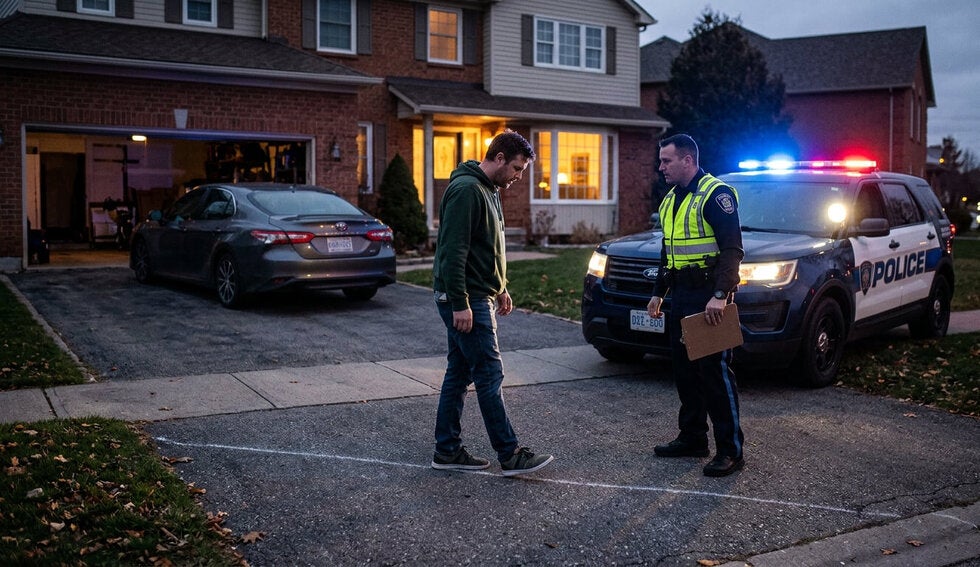
At Gallo Criminal Defense Las Vegas, we frequently encounter a common misconception among the public that being on private property provides a shield against certain criminal offenses. When it involves the operation of a motor vehicle, many people believe that law enforcement authority ends where the public road meets a private driveway or a business parking lot. However, under current Nevada DUI law, specifically NRS 484C.110, the reach of the state regarding intoxicated driving is much broader than many realize. We want to clarify the reality: a person can indeed be arrested and face a charge even if they are driving on land that is not a public highway, as the regulation of safety extends to any area where drivers might operate a vehicle.
Our legal team understands that for all practical purposes, the distinction between a public thoroughfare and a private lot means nothing when a safety officer observes erratic behavior. Whether you are on the side of a remote dirt path or within the full width of a gated community, the police have the power to intervene. If you find yourself facing such charges, it is vital to consult our firm so we can review every page of the police report to build robust defenses. We are here to ensure your rights are protected, regardless of where the incident occurred.
The Scope Of Nevada Intoxicated Driving Statutes
Our legal system in Nevada is designed to ensure the safety of every member within our communities. The primary statute governing this area of the law is NRS 484C.110. In addition to public roads, this specific part of the Nevada Revised Statutes makes it unlawful for any person to have actual physical control of a vehicle on any premises to which the public has access while under the influence. In our professional experience as attorneys, we have seen that the definition of these locations is the focal point of many drunk driving cases. This includes parking lots of a business or apartment complex common areas where legal action can be taken regardless of property ownership. Unlike some other states, Nevada law allows for few exceptions when it comes to the safety of the public in these shared spaces.
When someone is found in a car on private property, the police do not necessarily need to witness the individual driving on the open road to establish liability. If the person has the ability to start the engine and move the vehicle, they are considered to be in actual physical control. We have represented clients where the simple act of sitting in the driver's seat with the keys in the ignition led to a DUI arrest, often resulting in significant personal and financial expense. The court looks at the totality of the circumstances to determine if the individual had the means to operate the motor vehicle while their blood alcohol concentration was above the legal limits.
Defining Premises To Which The Public Has Access
The distinction between private property and public access is critical in our defense strategies. While your personal backyard might be considered strictly private, most places where vehicles are used fall under the broader definition found in nrs 484a.185. This statute helps define the difference between a private road and a public highway. A driveway that serves only one single family home is generally viewed differently than the access roads within a large commercial shopping center in Las Vegas. However, we caution our clients that even on a private driveway, if the conduct of the driver results in an injury or death, the legal consequences can be severe regardless of the exact location.
In many instances, the boundary lines of what constitutes a public area are blurred. For example, if a motorist is intoxicated and pulls off the highway into a parking lot of a local business to sleep it off, they might still face a DUI conviction. Our team at Gallo Criminal Defense Las Vegas meticulously reviews the evidence to see if the police had the legal authority to conduct a traffic stop or an arrest on that specific piece of land. If the area was gated, signed as private, and restricted from general public use, we might have grounds for a strong defense based on a lack of jurisdiction or a violation of rights.
Evidence Collection And The Role Of Breath And Blood Tests
Regardless of where the arrest occurs, the prosecution relies heavily on chemical testing. This includes a breath test or a blood test to measure the concentration of alcohol or drugs in a person's system. Under the Nevada implied consent law, any person who drives a vehicle in this state is deemed to have given their consent to such testing if an officer has reasonable grounds to believe they were driving under the influence. Failure to comply can lead to an immediate revocation of the driver's license.
We analyze the administration of these tests with extreme attention to detail. Whether it is a breathalyzer used at the scene or a blood sample taken later at the station, we look for errors in the process. Was the device calibrated correctly? Did the individual have a medical condition that affected the results? Did the officers follow the proper rules during the testing? These questions are vital in our efforts to help our clients avoid the penalties associated with a conviction. In cases involving marijuana or other substances, the presence of the drug in the urine or blood must be proven to have caused impairment at the time of the offense.
The Consequences Of A DUI Conviction In Nevada
The penalties for a first-time DUI in Nevada are designed to be a deterrent. A first offense is typically a misdemeanor but still carries significant weight. A driver may face fines, community service, and a requirement to attend a victim impact panel. Furthermore, the court often mandates the installation of an ignition interlock device in the person's car as a part of the sentencing. This device requires a clean breath sample before the vehicle will start. For a second or third offense, the consequences escalate to potential confinement in jail or state prison, especially if the incident is classified as a felony due to prior convictions or resulting harm to another person.
Our firm provides a consultation for those facing these charges to explain the full scope of what they are up against. Beyond the immediate legal fines and potential jail time, a DUI record can affect future employment, professional licenses, and insurance rates. We believe that every individual deserves a robust defense and a lawyer who will fight for their rights throughout the entire legal process. From the initial hearing to the final trial, we work to minimize the impact of the charges on our clients' lives.
Defense Strategies And Legal Resources
At Gallo Criminal Defense Las Vegas, our team utilizes every resource available to build a case for our clients. This includes reviewing police reports, body camera footage, and witness testimony. We search for any failure in law enforcement conduct, such as a traffic stop initiated without a warrant or probable cause. If the police entered private property without the necessary authority, the evidence they gathered might be deemed inadmissible in court. This is a common part of the defense in DUI cases occurring away from the main streets and highways.
We also look at the human element. Sometimes, a person might appear intoxicated due to exhaustion, illness, or a reaction to a legal prescription drug. In such a situation, the arrest might be based on a misunderstanding of the driver's condition. We aim to bring these facts to the attention of the prosecutors and the court to seek a reduction or dismissal of the charges. Our goal is to ensure that the law is applied fairly and that our clients receive the best possible outcome based on the unique circumstances of their case.
Understanding The Impact Of Intoxication Levels
The legal limit for blood alcohol concentration (BAC) in Nevada is 0.08% for adults over the age of 21. For those under the age of 21, the limit is much lower, reflecting the state's zero tolerance policy for underage drinking and driving. Even if a person's BAC is below the limit, they can still be charged with a DUI if their ability to drive safely was clearly impaired by alcohol, marijuana, or any other substance. We have seen cases where a combination of factors led to an arrest, even when no single substance was over a specific limit.
The presence of drugs in the system adds another layer of complexity to the law. Nevada has specific limits for various prohibited substances. As attorneys, we stay up to date on all changes to Nevada DUI laws to provide accurate information and effective representation. Whether the case involves a motor vehicle on a major road or a car in a private parking lot, we are prepared to handle the intricacies of the litigation.
Navigating The Legal Process With Professional Guidance
Facing a DUI arrest is an overwhelming experience. The legal system is complex, and the stakes are high. We encourage anyone in this situation to seek the help of a qualified DUI defense attorney as soon as possible. Our office is located in the heart of Las Vegas, and we serve clients throughout the entire area. By contacting us, you gain access to a team that understands the local court rules and the specific nuances of the Nevada DUI laws.
We provide the supervision and guidance needed to navigate the various stages of the case, from the initial arrest and booking to the administrative hearing regarding your driver's license and the criminal court proceedings. We believe in transparency and keep our clients informed at every step. We are here to answer your questions and provide the legal defense you need to protect your future. Don't let a mistake on private property define the rest of your life. Reach out to us at Gallo Criminal Defense Las Vegas today for the help you deserve.
Technical Analysis Of NRS Statutes Governing Local Jurisdictions
To fully grasp why we emphasize the risks of driving on private property, one must look at the specific language used by the Nevada Legislature. Under NRS 484C.110, the law does not restrict the offense of DUI only to public highways. The statute explicitly includes "premises to which the public has access." This phrase is expansive. We have analyzed cases where police successfully argued that a business parking lot, even if privately owned, qualifies because any person or motor vehicle could enter the area.
When we review a DUI arrest, we start by examining the location. If the incident occurred in a driveway or on private property where access is strictly limited, such as by a wall, a gate, or clear signage, our lawyer team looks for a failure of the prosecution to prove the "public access" element. The difference between a conviction and a dismissal often rests on these small details of the land and its boundary lines.
Procedural Rights During Traffic Stops And Arrests
Your rights as a citizen do not disappear the moment you are suspected of a DUI. In every case, we verify that the officers followed proper conduct. A traffic stop must be based on reasonable suspicion. If you were parked in a parking lot of a building and the police approached you, did they have a valid reason to initiate the process?
During the arrest, you have the right to remain silent and the right to an attorney. We strongly advise that you use these rights. Providing your name and license is required, but you are not obligated to provide information that could be used against you as evidence in court. Our firm has seen many examples where someone unintentionally damaged their own defense by speaking too much before their DUI attorney arrived.
Detailed Evaluation Of Chemical Testing Results

The admissibility of a blood test, breath test, or urine sample is a major pillar of any DUI defense. We investigate the testing results to ensure they meet the rigorous standards required by the state. This involves checking the administration of the test and the testing device used.
For example, a breathalyzer must be regularly maintained and calibrated. If the record shows a gap in maintenance, we may challenge the accuracy of the concentration reported. Similarly, in cases involving drugs or a specific substance, the testing must distinguish between past use and current impairment. This is particularly relevant with marijuana, where substances can remain in the system long after the intoxication has faded. We work with medical experts to review these test results and present a clear explanation to the prosecutors.
Navigating Felony Charges And Serious Penalties
While many DUI charges are misdemeanors, certain circumstances can elevate the offense to a felony. This typically occurs if there are two prior convictions within seven years, or if the driving caused substantial bodily injury or death to another person. In such cases, the penalty is significantly more severe, including potential confinement in a state prison.
We represent clients facing these high-stakes DUI cases with the utmost urgency. We understand that your life, your ownership of property, and your ability to support your family are on the line. We explore every way to mitigate the consequences, including advocating for treatment programs as an alternative to incarceration where appropriate. Our jurisdiction expertise allows us to navigate the statute requirements and seek a resolution that preserves your rights.
Administrative Hearings And Driver's License Revocation
A DUI arrest triggers two separate processes: the criminal case in court and an administrative process through the DMV regarding your license. The revocation of a driver's license happens almost immediately upon a refusal to take a chemical test or a failure of the test.
We represent you at the DMV hearing to contest the revocation. This is a critical part of our service, as losing the ability to drive can lead to job loss and other hardships. We review whether the officer provided the proper notice and followed the rules of the state regarding the license seizure. Having a lawyer present at this hearing provides an early opportunity to examine the evidence and the conduct of the law enforcement officers involved in your case.
Long-Term Impact On Future And Employment
The consequences of a DUI conviction go far beyond the fines and community service. A permanent criminal record can impact your standing in the community and your future career opportunities. Many employers have strict rules against hiring people with a recent DUI.
We understand the gravity of this situation. Our attorneys don't just focus on the court date; we focus on your life as a whole. We provide resources and advice on how to handle the aftermath of an arrest. Our firm has helped numerous members of the Las Vegas community get their lives back on track after a DUI. We are committed to being your authority on the law and your partner in the legal process.
Final Guidance For Motorists In Nevada
Safety on our roads and highways is a shared responsibility. However, if you find yourself in a situation where you are facing DUI charges, whether on a public road or private property, you need immediate help. Do not wait for the situation to worsen. The complexity of Nevada DUI laws requires the attention of an experienced DUI attorney.
At Gallo Criminal Defense Las Vegas, we offer a dedicated team ready to fight for you. We have the knowledge, the experience, and the resources to handle even the most difficult DUI cases. Contact our office today by phone to schedule a consultation. Let us help you understand the charges, evaluate the evidence, and build a defense that protects your rights and your future. Your case is our priority, and we will be with you every step of the way in the search for a fair outcome.
Frequently Asked Questions (FAQs)
Can I be charged with a DUI if I am sleeping in my car with the engine off?
Yes. Nevada's actual physical control standard means that if you have the keys and the ability to operate the vehicle even if the engine is off and you are sleeping you can still be arrested for a DUI on public or accessible private property.
What happens if I am arrested for a DUI on a motorized scooter or e-bike?
In Nevada, DUI statutes apply to vehicles. Depending on the power and classification of your e-bike or scooter, you may still be subject to NRS 484C.110. Law enforcement can arrest riders displaying signs of intoxication in public areas.
Can a DUI conviction on private property lead to vehicle forfeiture?
While less common for first-time offenses, certain circumstances or repeat felony DUIs in Nevada can lead to the state seeking the forfeiture of your vehicle as an instrument of the crime, regardless of whether the arrest occurred on private land.
Does Nevada offer a diversion program to keep a DUI off my record?
Generally, Nevada law is strict and does not allow for traditional diversion to dismiss a DUI. However, for those with a third offense felony, DUI Court may allow for intensive treatment to avoid prison, though a conviction often remains.
What are the rules for Medical Marijuana users regarding DUI arrests?
Having a medical marijuana card does not grant immunity. Nevada has specific per se limits for THC in the blood. If you exceed these nanogram limits or show active impairment, you can be convicted even if you are using the drug legally.
How does a DUI on private property affect my commercial driver's license?
A DUI arrest is devastating for CDL holders. Even if you were in a personal vehicle on private property, a conviction or administrative license failure typically results in a mandatory one year disqualification of your commercial privileges.
Can I refuse the Preliminary Breath Test at the scene?
The handheld PBT used at the roadside is different from the evidentiary test. While you can refuse the PBT, under NRS 484C.150, such a refusal allows the officer to seize your license and arrest you to compel an evidentiary blood or breath test.
Will my out-of-state license be revoked if I get a DUI in Las Vegas?
Nevada is a member of the Driver License Compact. If your driving privilege is revoked here, Nevada will notify your home state, which will likely take reciprocal action and suspend your license according to their own local state laws.
What is a Victim Impact Panel and is it mandatory?
Yes, for almost all DUI convictions in Nevada, the court requires attendance at a Victim Impact Panel. This is a session where individuals hear from those whose lives have been affected by drunk drivers to discourage recidivism.
Can I get my DUI record sealed in Nevada?
A misdemeanor DUI conviction can generally be sealed seven years after the case is closed. However, felony DUIs or cases involving substantial bodily harm can never be sealed under current Nevada law, staying on your criminal record permanently.

Comments
There are no comments for this post. Be the first and Add your Comment below.
Leave a Comment