
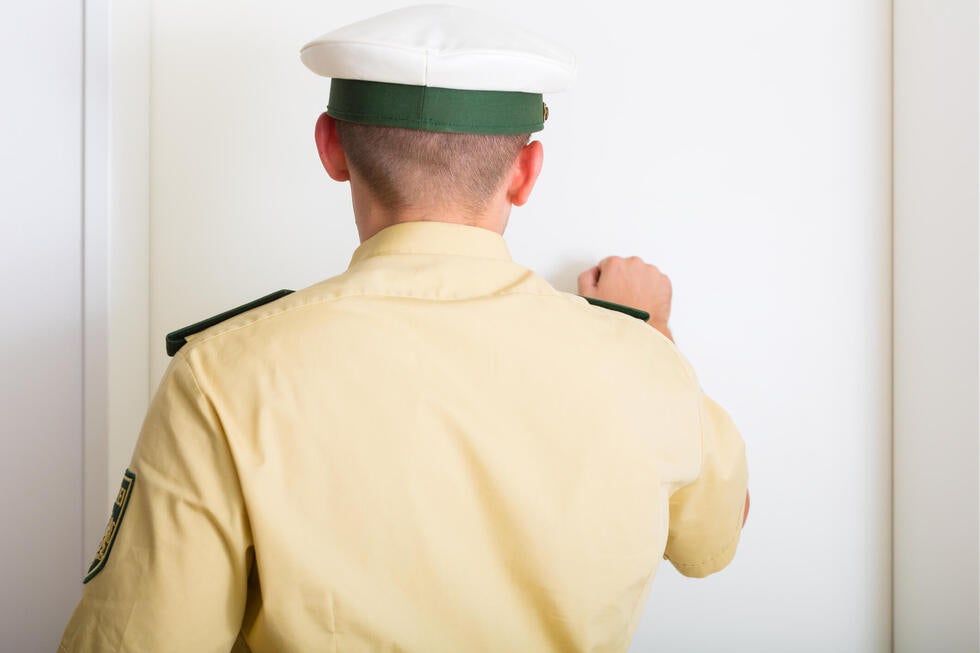
If police officers show up at your door without a warrant, you may wonder whether you have to let them inside. Although the Fourth Amendment protects against unreasonable searches and seizures, there are certain circumstances in which police can legally enter a home without a warrant. Understanding these exceptions and what constitutes valid consent can help you protect your constitutional rights.
In Nevada, police generally need a warrant to enter your home unless a legally recognized exception applies. These exceptions may include voluntary consent, emergency situations, certain instances of hot pursuit, or an imminent risk of evidence being destroyed.
This guide explains when police can enter your home without a warrant in Nevada, what rights you have when officers come to your door, and what steps you can take if you believe police entered your home unlawfully. This article is intended for general informational purposes and does not constitute legal advice.
The Default Rule: Your Home Gets the Strongest Protection
The Fourth Amendment and the Nevada Constitution protect people against unreasonable searches and seizures, and the home is where that protection is strongest. In Payton v. New York, the U.S. Supreme Court held that a warrantless, non-consensual entry into a home to make an arrest is presumptively unreasonable. Officers with a valid arrest warrant can enter the home of the person named in it if they have reason to believe that person is inside, but they need a separate search warrant to look for a guest or another person in someone else's home.
Nevada law reflects that structure. NRS 171.138 lets an officer who is refused admittance break open a door or window of a house to make an arrest, but only after demanding admittance and explaining why. Nevada also limits no-knock warrants: under NRS 179.049, a judge may issue one only if the sworn affidavit shows there are no reasonable alternatives, addresses whether the warrant can be executed during the day, and certifies that a trained officer will supervise. A no-knock warrant is void if the officer deliberately misrepresents or omits a material fact in the affidavit.
The Door Is the Line: What Police Can Do Without a Warrant
Officers do not need a warrant to walk up to your front door and knock. The Supreme Court has recognized that a visitor, including a police officer, has an implied license to approach a home, knock, and wait briefly, as explained in Florida v. Jardines. That is often called a "knock and talk."
What they cannot do is walk in simply because you answered. You do not have to open the door, you do not have to step outside, and you do not have to answer questions. You can speak through the closed door and ask whether they have a warrant. Remember that opening the door and standing in the doorway can change the analysis, since courts have treated a person standing in an open doorway as being in a public place for Fourth Amendment purposes, so think about what you want to do before you open it.
The Exceptions That Allow Entry Without a Warrant
| Exception | What it means | Limits |
|---|---|---|
|
Consent |
A person with authority over the home agrees to let officers in or to a search. |
Must be voluntary, can be limited or withdrawn, and officers are not required to tell you that you may refuse. |
|
Emergency aid |
Officers reasonably believe someone inside is seriously injured or threatened with imminent injury. |
Requires an objectively reasonable basis, as in . A general welfare check is not enough by itself. |
|
Hot pursuit |
Officers are chasing a suspect who flees into a home. |
Not automatic for minor offenses. In , the Court held that pursuit of a fleeing misdemeanor suspect does not always justify entry. |
|
Preventing destruction of evidence |
Officers have a reasonable belief that evidence is about to be destroyed. |
Officers cannot create the emergency by violating the Fourth Amendment, but under , the act of knocking is not a violation. |
|
Protective sweep |
After a lawful arrest in the home, a limited check for people who could pose a danger. |
Limited in scope and purpose. |
|
Plain view |
Officers who are lawfully inside can seize items that are immediately apparent as evidence. |
Applies only after a lawful entry. |
Two of these deserve a closer look. On welfare checks, the Supreme Court held in Caniglia v. Strom that there is no broad "community caretaking" exception that lets police enter a home without a warrant just to check on someone. The emergency aid exception still applies, but it requires more than a general concern.
On evidence, Kentucky v. King is the case that matters in real life. If officers knock, and what they then hear gives them a reasonable belief that evidence is being destroyed, they may be able to enter. That is why what happens in the seconds after a knock can decide a case.
Roommates, Landlords, and Hotels: Who Can Say Yes?
Consent can come from someone with common authority over the space, but there are limits that matter in Las Vegas, where many people live with roommates or stay in hotels and short-term rentals:
- Roommates and co-occupants: if you are present and clearly object, a co-occupant's consent generally does not override you under Georgia v. Randolph. If the objecting person has been lawfully arrested and removed, Fernandez v. California says the other occupant's consent may still be valid.
- Landlords: a landlord generally cannot consent to a search of your home while you are a tenant.
- Hotel rooms: a guest has Fourth Amendment protection in a rented room, and under Stoner v. California, a hotel clerk cannot consent to a police search of it. That protection can end if you have checked out or been lawfully evicted.
Special Situations in Nevada
Domestic violence calls. These are one of the most common reasons officers enter a home. Nevada requires an arrest when officers have probable cause to believe a battery constituting domestic violence occurred, with limited exceptions, under NRS 171.137. Officers who hear screaming or see signs of injury may rely on the emergency aid exception to enter. Whether the entry was justified often turns on what they could see and hear before they went in.
Probation and parole. If you are on probation or parole, the conditions you agreed to may allow searches that would otherwise need a warrant. Ask your attorney what your conditions allow.

What to Do If Officers Come to Your Door
- Stay calm, and do not open the door right away. You can speak through it.
- Ask whether they have a warrant, and ask them to show it through a window or slide it under the door. A valid warrant names the address and is signed by a judge.
- If they do not have one, say clearly: "I do not consent to entry or to any search." Say it plainly, once or twice, and do not argue.
- Do not physically resist or block officers, even if you believe they are wrong. The place to challenge an entry is in court, not at the door.
- Do not lie or make statements. You have the right to remain silent and to speak with a lawyer. Our guide on your rights after being arrested in Nevada explains how to invoke them.
- If it is safe, note the officers' names, badge numbers, and the time. Nevada has a statute on recording law enforcement activity (NRS 171.1233), but do not interfere with the officers while you record.
- Call a criminal defense lawyer as soon as you can, and write down what happened while it is fresh.
What Happens If Police Enter Illegally
If officers enter without a warrant or a valid exception, a defense attorney can file a motion to suppress the evidence they found. If the court agrees, that evidence, and anything that flowed from it, may be excluded from the case. Our guide on what a motion to suppress evidence is explains how that works.
There are limits. A violation of the "knock and announce" rule, for example, generally does not lead to suppression under Hudson v. Michigan, and courts apply exceptions such as good faith when officers rely on a warrant that later proves defective. For related issues, see our posts on whether police can search your car without a warrant and whether police can search your phone after an arrest.
Were Police in Your Home Without a Warrant?
Whether an entry was lawful depends on small details: what the officers said, what they heard, who answered the door, and what you said. If you were arrested or charged after officers came into your home, contact Gallo Criminal Defense Las Vegas to discuss what happened. You can reach our Las Vegas criminal defense lawyer at (702) 385-3131, 24 hours a day, for a free and confidential consultation.
Frequently Asked Questions
Do I have to open the door for the police?
No. You can speak through a closed door and ask whether they have a warrant. You do not have to open it, step outside, or answer questions.
Can police enter if they hear screaming or suspect domestic violence?
Possibly. If officers have an objectively reasonable belief that someone inside needs immediate aid, they may enter under the emergency aid exception. Whether it was justified depends on what they saw and heard.
Can my landlord let the police in?
Generally no. A landlord cannot consent to a search of a tenant's home. The tenant, or someone else with authority over the space, must consent.
Can police enter a hotel room without a warrant?
Generally not. Guests have Fourth Amendment protection in their rooms, and a hotel clerk cannot consent to a police search of one. That protection can end after checkout or a lawful eviction.
What if the police entered my home illegally?
An attorney can ask the court to suppress the evidence through a motion to suppress. Whether it succeeds depends on the facts and on exceptions that may apply.
Can police search my home if I am on probation or parole?
It depends on your conditions. Many probation and parole terms allow searches that would otherwise need a warrant, so ask your attorney what yours permit.
This article is for general informational purposes only and does not constitute legal advice. Nevada criminal law and federal constitutional law are complex and may change. Consult a licensed Nevada criminal defense attorney about your specific situation.
